


Ever watched a traveller at a gate five minutes before boarding? Coffee in one hand. Phone in the other. Luggage strap around their ankle. And a receipt, a half eaten sandwich wrapper, and an empty water bottle going... somewhere.
That somewhere is usually the wrong bin.
Airports are weird. They look like shopping malls. They feel like hotels in some parts. But waste there behaves nothing like waste in those places. We have learned this the hard way working with airport operators across the UAE.
Let me explain what makes airports so different. And why your standard waste plan will fail there.
The Numbers Will Shock You
Dubai International alone moved over 86 million people through its doors in 2024. That is a city. A big one. Each passenger leaves behind roughly 1.2 to 1.5 kilos of trash. Do the multiplication. You get well past 100,000 tons a year. From one airport.
An office building with two thousand workers? Maybe 300 tons annually. An airport does that in a few days.
So you cannot just place a few bins and call it done. You need high capacity containers everywhere. And you need them emptied multiple times per shift. Especially at the gates. That is where the mess happens.
Passengers Do Not Sort. They Just Drop.
Here is a truth nobody likes to admit. People in airports are not thinking about recycling. They are thinking about missing their flight. The bins could be hot pink with flashing arrows, and they will still toss everything into the nearest hole.
We have seen the contamination rates. They are brutal. A huge chunk of what goes into airport recycling bins should never be there.
So what do you do? You cheat a little. Put the recycling bin slightly closer to the walking path than the general waste bin. Use pictures, not words. Big pictures. And then accept that you will need manual sorting after collection anyway. That is just the cost of doing business in aviation.
Security Changes Everything
Try placing a bin near a security checkpoint. You cannot. Try leaving a full bin unattended for hours. Also cannot. Airports have rules about bin materials, opening sizes, even transparency in some cases. The goal is to stop people from hiding things.
This means your collection schedule is not driven by waste volume. It is driven by security protocols. We have clients who empty certain bins every 90 minutes just because the rule says so. That is expensive. But skipping it is not an option.
The Stuff In Airport Waste Is Weird
Normal offices produce paper, food scraps, and plastic bottles. Airports produce all of that plus a long list of oddities.
Catering waste from international flights. That stuff often has to be incinerated or deep buried. You cannot just compact it with the rest.
Liquids from security. Thousands of water bottles surrendered daily. Those need draining before the plastic goes anywhere.
Duty free packaging. Glass perfume bottles. Electronics boxes. All bulky. All fill up bins fast.
And maintenance areas. Used oils. Hazardous materials. Even de-icing fluids in some places, though less of a concern here.
A standard waste plan does not account for this mix. An airport waste disposal system must handle multiple streams with different rules, often in the same shift.
Also Read: Why POWER Bear Products Are Trusted for Sustainable and Custom Waste Solutions
The Regulations Pile Up
The UAE has its federal waste laws. That is one layer. Then each emirate adds its own. Then the airport has internal rules. Then the GCAA (General Civil Aviation Authority) has environmental standards. Then IATA pushes its own sustainability targets.
Miss any of those, and you risk losing certification. Not just a fine. Certification. That is serious.
We have seen airports invest heavily in documentation and tracking because of this. Every bin. Every collection. Every ton recycled. It all gets logged.
Also Read: The Economic Impact of a Poor-Quality Garbage Bin
Recycling Is Harder At Airports. But You Have To Do It Anyway.
Here is the contradiction. Recycling at airports is a nightmare because passengers contaminate everything and security restricts where bins go. But recycling at airports is also incredibly visible. Millions of people see those bins every year. Their impression of the UAE's green commitments is shaped by what they see in the terminal.
So you have to make it work.
We helped Dubai Airport with this. They chose our recycling bin for their new recycling concept. Four compartments. Stainless steel. Built to take a beating. Easy for cleaning crews to handle.
The real secret though? Work backwards. Find out what your local recyclers actually accept. Then design your bin labels and placement around that reality. Do not guess. Call them. Ask.
Getting The Waste Out Is A Logistical Puzzle
A mall has a loading dock. Trucks come. Bins get emptied. Trucks leave.
An airport has terminals, airside zones, landside zones, security checkpoints between them, and restricted hours for vehicles near runways.
You cannot just drive a compactor truck up to Gate B24. You need clearance. You need a time slot. Sometimes you need an escort. Airside collections require special passes and vehicles that meet tough safety standards.
This is why we tell airport planners to bring waste consultants in during the design phase. Retrofitting a collection system after the terminal is built is painful. Expensive too.
Also Read: Waste Management Challenges in the UAE and How Power Bear’s Trash Bins Offer Solutions
What Actually Works
Based on real projects we have done across UAE airports, here is what delivers results.
Multi-Stream bins. Terminals change. Gates open and close. Singular bins become useless, especially for segregated waste, and take up more space. Our Multi-Stream Bins are designed for practicality and space optimization.
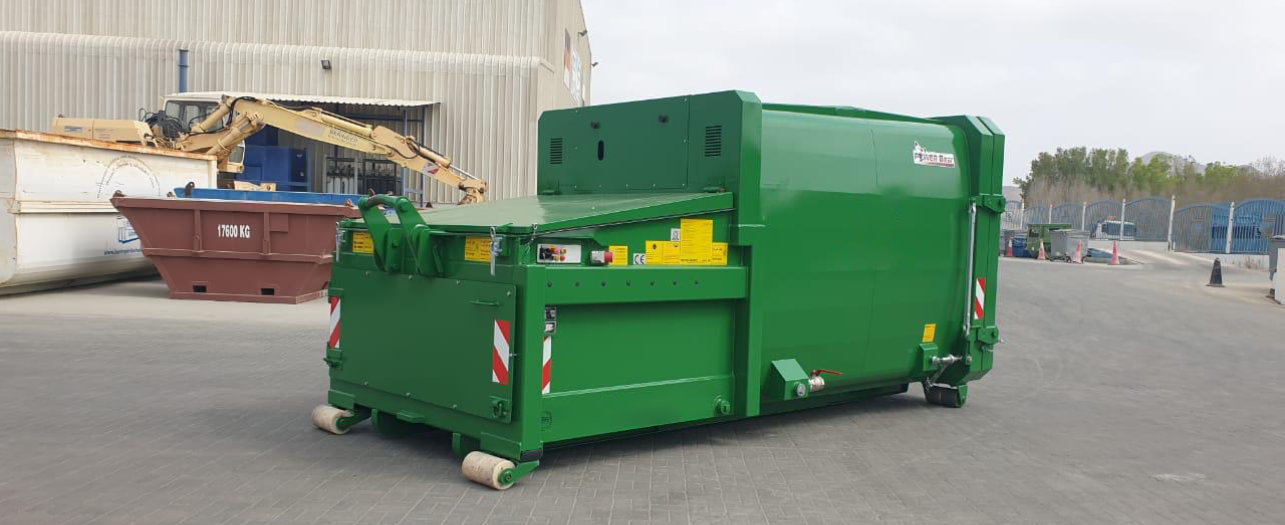
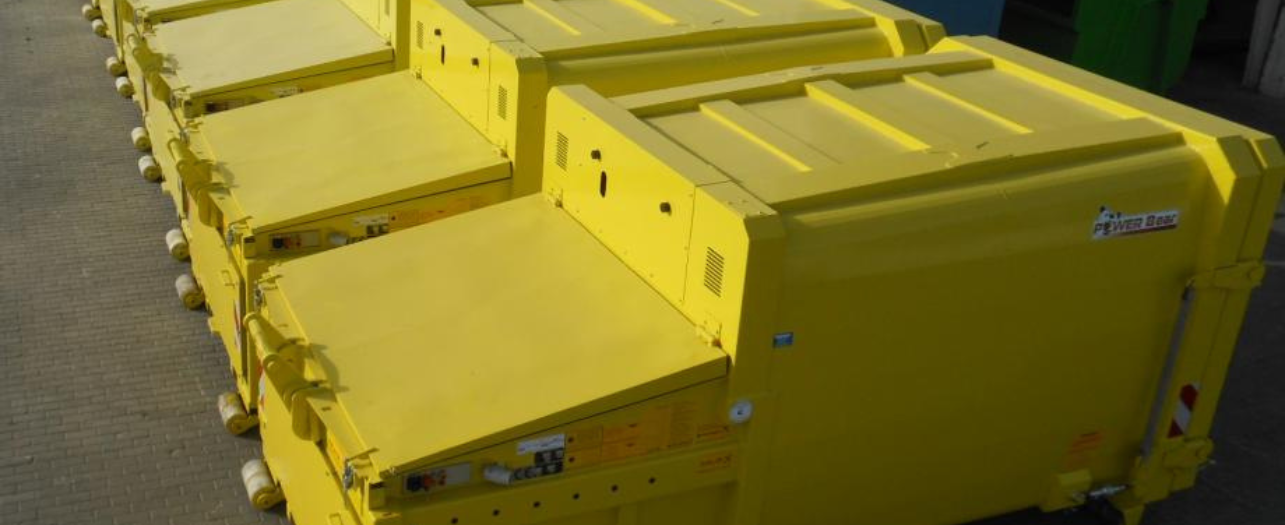
On site compaction. The X5 Type Portable Compactor we supply reduces waste volume by up to 80 percent. Fewer truck trips through security checkpoints. That saves money and reduces risk.
Train your cleaners properly. They are the ones who pull contamination out before it hits the compactor. A good cleaning team is worth more than any fancy bin.
Work with a supplier who gets aviation. Not every bin meets airport security standards. Our Campus Quattro and Bin-e units are designed with those rules in mind.
A Final Word For Airport Decision Makers
Do not treat your airport like a mall. You will end up with overflowing bins, ruined recycling batches, security headaches, and a compliance officer breathing down your neck.
Start with passenger behaviour. Accept that people will mess up. Build a system that works around that fact, not against it.
We have seen the difference. Fewer missed collections. Lower contamination. Better inspection results. And a visible sustainability story that travellers actually notice.
Look at your current setup honestly. Are your bins right for high turnover areas? Are your collection routes optimised for security? Do you know your contamination rate?
Get those answers. Then build a strategy that fits the weird, wonderful, chaotic reality of aviation.
