


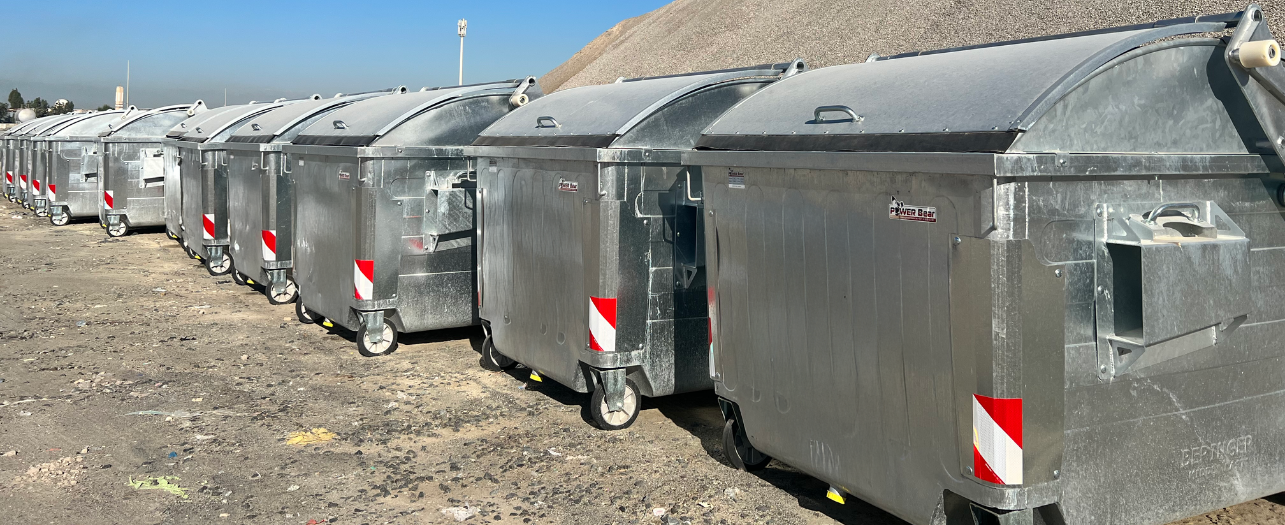
Here is something that catches a lot of facilities off guard. They invest in galvanized steel bins because they want something durable, something that holds up outdoors without constant attention. Then they clean them with whatever product is nearby. Within a couple of years, the rust shows up, the coating looks patchy, and nobody connects it back to the cleaning routine.
That connection is worth making. Because knowing how to clean galvanized steel bins correctly is what separates a bin that lasts a decade from one that needs replacing after three years.
What the Zinc Coating Actually Does
The zinc layer on a galvanized bin is not cosmetic. It is the entire protective system. Steel on its own rusts. Zinc corrodes first, sacrificially, buying the steel underneath more time. That process works well under the right conditions and accelerates badly under the wrong ones.

The wrong conditions include a surprising number of everyday cleaning products.
How to Clean Galvanized Steel Bins: The Everyday Approach
For routine dirt, dust, and surface grime, mild soap and warm water is the right answer. A nylon brush or soft cloth. Nothing abrasive. Car wash soap is a solid choice because it is formulated to clean metal without attacking protective coatings.
The finishing matters more than most people realise though. After washing, rinse with clean water. Then actually dry the bin, paying particular attention to hinges, the base edge, and any lid rim. Water sitting in low-ventilation spots on galvanized steel is where white rust gets its start. A thorough dry after each wash costs very little time and prevents a problem that is genuinely tedious to treat once established.
In the UAE, outdoor bins accumulate dust quickly and constantly. Light, regular cleaning is far kinder to the zinc than letting grime build up and then scrubbing hard to shift it. That pattern of neglect and force is one of the main ways coatings wear down faster than they should.
When Soap Is Not Enough
Bins collecting food and drink waste develop staining that plain soap will not always lift. Dried soft drink residue, coffee, anything sugary that has been sitting since the last collection.
Diluted ammonia cleaner handles most of this. The dilution is not optional. High-concentration ammonia pushes the pH above 12, at which point it becomes corrosive to zinc. Diluted, applied briefly, then rinsed off with clean neutral water, it does the job without causing harm. Do not let any cleaning solution dry on the surface before rinsing.
A 50/50 mix of white vinegar and water also works on mild staining. Apply it, give it a few minutes, rinse it off properly. Vinegar is mildly acidic, so the rinse step matters. Use it and remove it.
White Rust: What It Is and How to Handle It
White rust appears as a chalky, powdery residue on galvanized surfaces, usually where moisture has been collecting without drying out properly between cycles. It looks alarming.
It is less serious than it looks, initially at least. The zinc is oxidising under persistently damp conditions, faster than a stable protective patina can form. The steel underneath is still protected. The concern is that the sacrificial zinc layer is being consumed more quickly than it should be.
To treat it, use the vinegar-and-water solution. Soft cloth, gentle scrub with a nylon brush, thorough rinse, complete dry. Do not use steel wool or abrasive pads. The damage to the surrounding intact coating will outweigh whatever the white rust itself was doing.
After treating it, figure out why it is forming. Drainage issue at the base? A badly fitting lid trapping moisture? Poor air circulation around the bin's placement? Cleaning the symptom without changing the condition produces the same result again quickly.
Products That Damage the Coating
This matters more than any other part of galvanized bin maintenance, because chemical damage to the zinc coating is often irreversible without full re-galvanizing.
Bleach and high-strength disinfectants are a genuine problem. If a bin needs disinfecting, fine, but rinse it thoroughly with clean neutral water immediately afterwards before the product dries on the surface. pH exposure above 12 corrodes zinc directly.
Steel wool and rough scouring pads physically remove zinc. If something stuck to the surface needs mechanical help to shift, use a hard plastic brush. It provides enough friction without stripping the coating.
Strong acids dissolve zinc fast. Diluted vinegar used correctly and rinsed promptly is one thing. Concentrated acid-based cleaners are a different matter entirely.
One less obvious risk: galvanized steel sitting in direct contact with copper or brass fittings creates a slow electrochemical reaction that depletes the zinc at the contact point. The damage is quiet and cumulative. An insulating layer between the metals stops it.
Also Read: Eco-Friendly and Cost-Effective: Why Galvanized Bins Are Ideal for Sustainable Living
How to Maintain Galvanized Steel Bins for the Long Term
Knowing how to maintain galvanized steel bins goes beyond the cleaning routine itself. A few additional habits extend the life of the coating significantly.
Applying a protective wax or sealant after cleaning adds a barrier between the zinc and whatever the environment is throwing at it. In coastal areas of the UAE, where airborne salt settles on exposed metal surfaces continuously, this is worth doing as a regular practice. Salt accumulation on zinc, without consistent rinsing, degrades the coating over time. In those environments, rinsing the bin with clean water matters even when it does not look dirty.
For spots where the coating has been physically chipped by impact, zinc spray is a practical repair. It restores the sacrificial zinc layer at the damaged point before the base steel is exposed. It is not the same as re-galvanizing, but for small areas of coating damage caught early, it is effective and buys considerable additional service life.
Make a habit of checking hinges, lid edges, and the base perimeter during any cleaning session. These areas take the most mechanical wear from daily use and are reliably where coating damage shows up first. An early catch means a zinc spray touch-up. A late catch means dealing with established rust.
Protecting Galvanized Coating in the UAE
To protect galvanized coating in an environment like the UAE, frequency and consistency matter more than technique. The conditions here, intense UV, coastal humidity, constant dust, airborne salt near the shoreline, are harder on metal surfaces than a milder climate would be.
The same principles apply everywhere: clean gently and regularly, rinse thoroughly, dry completely, avoid abrasive tools and aggressive chemicals, repair coating damage promptly. What changes here is that these are not optional habits. They are what determines whether a galvanized bin serves the site reliably for years or becomes an ongoing problem within a few seasons.
POWER Bear’s galvanized steel bins are hot-dip galvanized and built for high-volume waste collection across commercial, residential, and municipal settings throughout the UAE. To discuss specifications or find the right option for your site, contact the team directly.
