


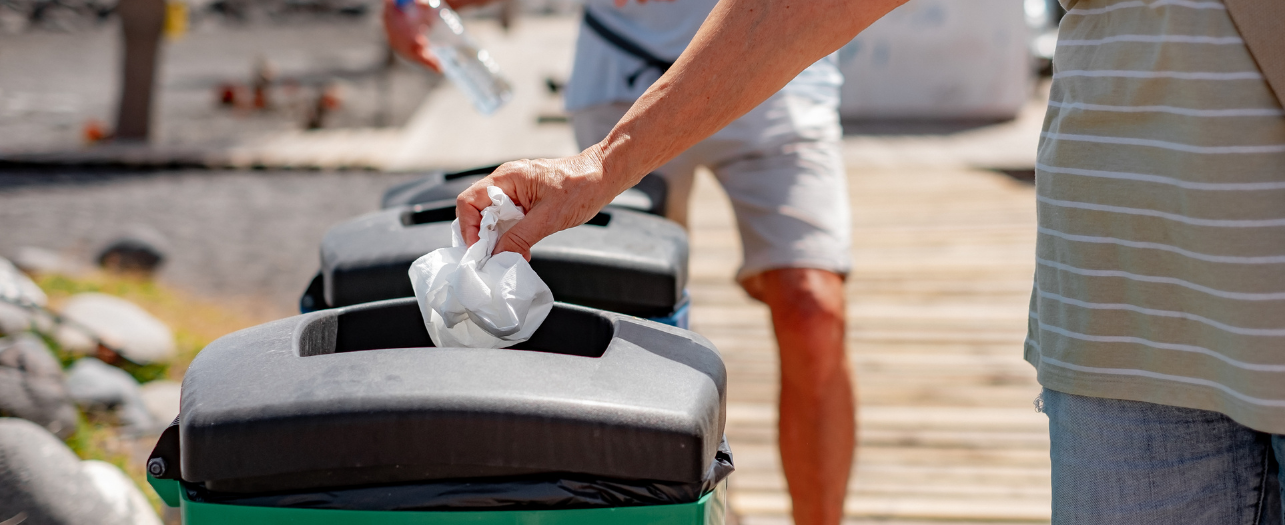
A bin placed on a Dubai beach is not living the same life as a bin placed in an office lobby. It faces salt-laden air around the clock. Sand works its way into every joint and hinge. Temperatures push past 40°C for months at a stretch. Humidity sits high. Footfall on a popular beach can run into the thousands on a single day, and most of those visitors are carrying food, drinks, and the kind of waste that draws insects and odour fast.
Standard bins are not built for any of that. Put one on a coastline and give it six months. The results are predictable.
The Coastal Environment Is Harder on Equipment Than Most People Realise
Salt air is the main culprit, and it is more aggressive than it looks. Airborne salt particles settle on every exposed surface and, over time, break down protective coatings and attack metal underneath. Steel that performs well inland can show visible rust within a year on a beachfront. Even grades of stainless steel that are generally considered corrosion-resistant are not immune when chloride exposure is consistent and prolonged.

This is not a cosmetic problem. Once corrosion starts on the structural parts of a bin, its integrity deteriorates. Lids stop fitting properly. Hinges seize or break. The base weakens. What began as surface rust becomes a bin that cannot function as intended and looks neglected in an environment where appearance genuinely matters to visitors and municipal authorities alike.
Sand compounds the issue in a different way. It is abrasive. It works into mechanisms, scratches surfaces repeatedly, and holds moisture against metal longer than a clean surface would. On a windy day, sand is not sitting still. It is being driven against every surface at low level constantly. A bin designed with smooth interior joints and minimal exposed hardware will always outlast one that was not.
Also Read: What Are Plastic Bins and Why Are They So Widely Used
Beachside Bins Have to Handle More Waste, More Often
The volume challenge on beaches is real and often underestimated. A beach that draws large weekend crowds generates waste at a rate that would overwhelm a bin sized for light daily use. Food packaging, beverage containers, wet waste from snacks and drinks, cigarette butts — these accumulate quickly and in combination produce odour, spillage, and overflow that turns a functional bin into a problem.
Cigarette litter on UAE beaches is a documented issue. Bee'ah, which manages beach cleaning in Sharjah, has identified cigarette butts as one of the most persistent waste challenges on its coastlines, noting that butts discarded into sand carry toxins that contaminate water and are mistaken for food by marine animals and birds. A beachside waste setup that does not account for cigarette disposal separately from general waste is missing a meaningful part of the problem.
Capacity and collection frequency have to be matched to actual usage. A bin that overflows by Saturday afternoon on a popular beach is not a collection scheduling failure. It is a bin specification failure.
Material Choice Matters More Here Than Anywhere Else
This is where beachside bins diverge most clearly from general outdoor bins. The material question is not simply about durability in abstract terms. It is about what a specific material does in a salt-air, high-UV, high-humidity coastal environment over a three to five year period.
Fibre Reinforced Polymer, commonly referred to as FRP, performs strongly in this context. It is made by combining fibreglass and resin into a composite that is inherently resistant to rust and corrosion. There is no metal substrate underneath a painted surface waiting to be exposed when the coating chips. The resistance is through the material itself. FRP is also lighter than steel, which matters when bins need to be repositioned along a beach frontage or transported for cleaning.
UV degradation is a separate consideration. The UAE sun is not gentle on materials. Plastics that are not UV-stabilised will fade, crack, and become brittle over time. Properly formulated FRP and UV-resistant polymers hold up significantly better than standard plastic alternatives in high solar exposure environments. On a beachfront, where a bin sits in direct sun for the majority of the day year-round, that difference shows up within the first couple of seasons.
Galvanised steel can work in coastal settings when properly specified and maintained, but it requires more active upkeep than polymer alternatives and carries a higher long-term cost in a harsh coastal environment. The maintenance case for FRP in these settings is well-established.
Design Elements That Coastal Bins Actually Need
Beyond material, certain design features make a measurable difference on a beach specifically.
Enclosed lids matter. An open-top coastal bin is an invitation for wind-blown litter, rain ingress, and insect access. A lid with a controlled aperture keeps contents contained and reduces odour exposure to the surrounding area. On a beach where the wind direction changes and picks up regularly, an open-top bin will redistribute its own contents.
Anchoring is worth thinking about. Lightweight bins on an exposed beachfront can be knocked over by strong winds or moved by visitors. Bins designed with a base provision for ground anchoring or sufficient ballast stay where they are placed.
Drainage at the base is often overlooked. Liquid waste from drinks and food, combined with occasional rain and sea spray, will pool inside a bin that has no drainage provision. Standing liquid accelerates odour, attracts pests, and creates a genuinely unpleasant experience for the next person using the bin. A simple drainage aperture at the base solves this.
Finally, the aperture design on the bin itself shapes how it gets used. A wide, unguarded opening makes it easy to dispose of large items but also makes the bin's contents visible and accessible. A hooded or baffled opening keeps contents out of sight, reduces wind scatter, and makes the bin less attractive to seagulls and other scavenging birds, which is a real operational consideration in coastal settings.
Beachside Bins and the Wider Coastal Environment
The UAE has made serious commitments to protecting its marine and coastal environments. Efforts to reduce plastic waste, prevent sea dumping, and protect coastlines are documented across federal and emirate-level policy. The infrastructure supporting those commitments, waste bins included, has to be up to the task.
A corroding, overflowing, or poorly sited bin on a beach does not just fail its immediate function. It contributes to the problem its presence was meant to address. Waste that cannot be contained ends up in the sand or the water. The bin becomes part of the pollution rather than the solution to it.
Specifying coastal waste bins properly, in the right material, with the right design features, sized and sited for actual usage patterns, is a decision with consequences that extend well beyond the bin itself.
POWER Bear supplies waste management solutions across the UAE, including options well-suited to coastal and high-exposure outdoor environments. Speak to the team about what works for your specific site.
