


Pharmaceutical companies in the UAE operate under a level of regulatory scrutiny that most other industries simply do not face. That scrutiny extends to every stage of their waste chain. And yet, the container sitting at the point of generation, the very first step in that chain, often gets the least attention.
That is a problem worth taking seriously.
Pharmaceutical Waste Disposal in UAE Is Governed by Specific, Enforceable Law
Start with the legal reality. Federal Law No. 24 of 1999 for Regulation of Handling Hazardous Materials establishes the federal baseline. Local Order No. 115 of 1997 sets the rules specifically for medical waste management within Dubai. These laws are not principles or guidelines. They come with inspection powers, fines, and in serious cases, facility suspension.
One area where companies get caught out repeatedly: pharmaceutical waste is a distinct category under UAE law, separate from clinical waste and general waste. Expired medications, laboratory reagents, discarded disinfectants, none of these belong in a clinical waste bag or a standard bin. Treating them as interchangeable is a compliance failure, even if the waste ends up being collected by a licensed contractor.
Penalties for missing or falsified Waste Transfer Notes range from AED 5,000 to AED 50,000 per violation. That figure applies per incident, independently of any other infraction a facility might be carrying.
The container is where compliance either starts or breaks down.
Also Read: How Setting Clear Waste Management Objectives Can Improve Your Business's Sustainability
Standard Bins Were Not Designed for This
It sounds obvious when you say it directly. A general-purpose waste bin is built for general-purpose waste. Pharmaceutical environments are not general-purpose.
Many pharmaceutical residues are corrosive. Others are reactive, or capable of releasing vapour at room temperature. A standard bin with a loose or ill-fitting lid does not contain those risks. It relocates them, usually onto the people handling the waste, or into the storage area where it sits between collections.
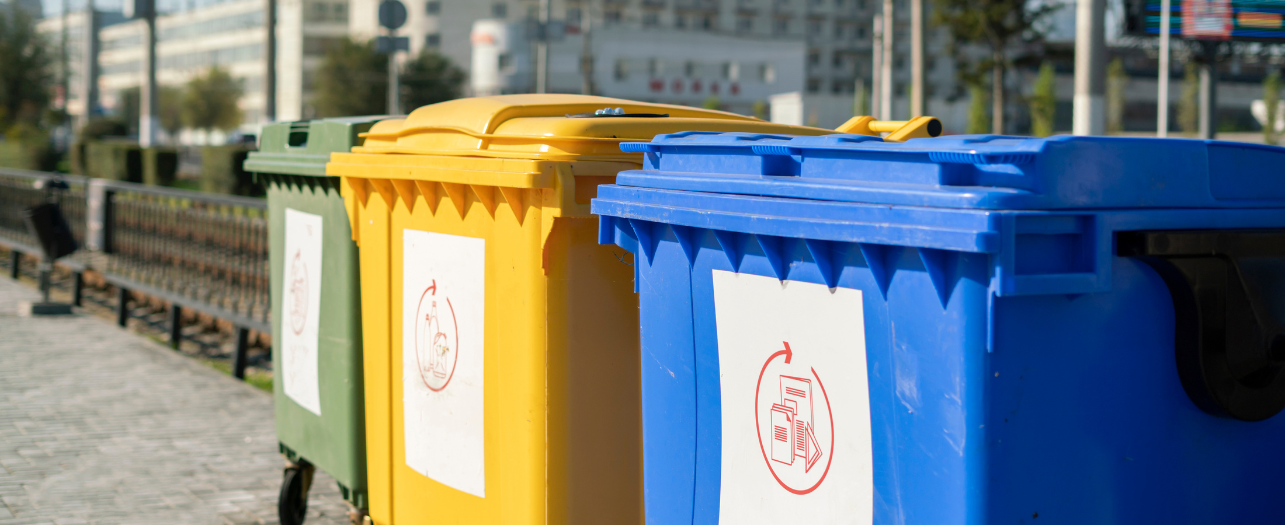
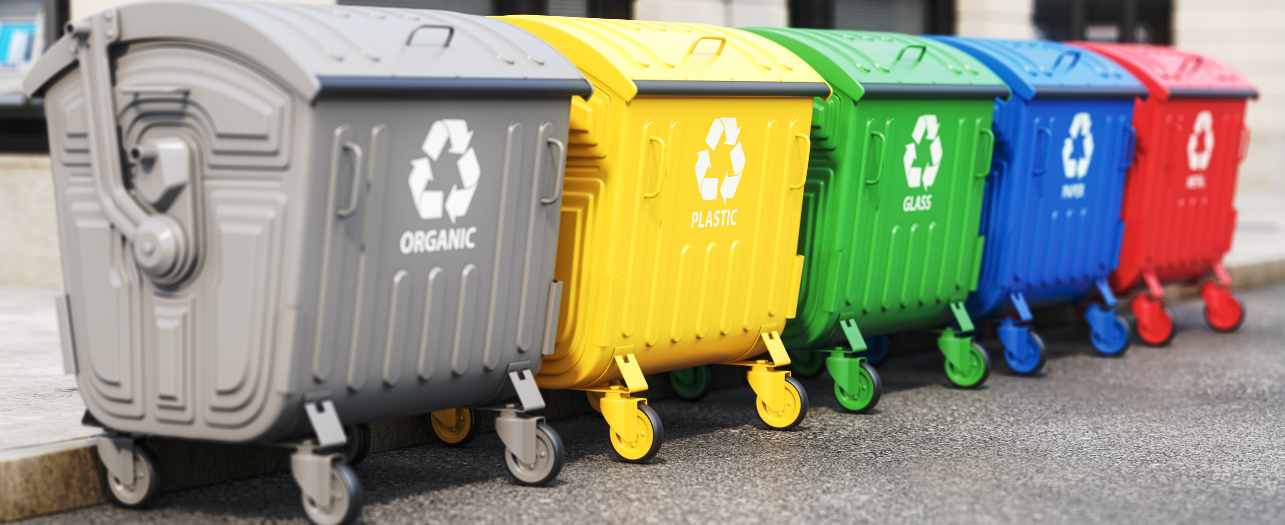
Then there is colour coding. International standards assign specific colours to waste categories. Blue designates pharmaceutical waste. Yellow covers infectious material. Purple is for cytotoxic waste. Each stream has its own disposal route, its own documentation requirements, its own licensed contractors. Containers without correct colour coding remove the visual system that staff depend on, particularly in facilities where multiple languages are spoken and written labels alone cannot carry the full burden of communication.
UAE regulations also require biohazard symbols and labelling in both English and Arabic on containers used in healthcare and pharmaceutical settings. A container that does not meet those specifications is already out of compliance before a single gram of waste goes into it.
The Segregation Failure Happens Earlier Than Most Facilities Think
When a pharmaceutical waste disposal incident is traced back to its source, it rarely starts at the collection or disposal stage. It starts at the bin. Specifically, it starts when someone dropped something into the wrong one.
Controlled and semi-controlled drugs must go through the National Platform for Controlled Medications (NPCM), a process involving DHA approval and coordination with Dubai Municipality before any destruction can occur. Non-controlled pharmaceuticals require a separate licensed disposal route with its own documentation trail. Cytotoxic drugs go into the purple stream entirely. These are not interchangeable processes.
The only practical way to enforce this at the point of generation is through clearly designated, purpose-built containers. When a facility relies on generic bins, staff are making judgement calls under time pressure, often without adequate training on the distinctions between waste categories. Purpose-built, correctly labelled containers take that judgement call away. The container itself communicates what goes inside it.
Controlled Substances Carry the Heaviest Scrutiny
The documentation requirements around controlled drugs are on a different level. Destroying them in the UAE requires Ministry of Health and Prevention inspectors to verify quantities against actual stock before any disposal process can begin. After that, the pharmacist in charge coordinates with the municipality for the physical destruction. Every step produces records that regulators expect to see.
Destruction certificates must be retained for a minimum of five years. DHA pharmaceutical audits request these documents specifically. If storage containers are inadequate, if waste is mixed, quantities are unclear, or the paper trail does not match what was supposedly generated, the consequences go beyond a fine. A facility that used a non-licensed disposal route for controlled drugs faced an AED 25,000 fine in Dubai, a 30-day suspension during investigation, mandatory retraining for all staff, and a permanent compliance flag on its facility record.
Specialist containers with tamper-evident closures, lockable lids, and clear capacity markings reduce the risk of that kind of discrepancy. When the container makes proper use straightforward, the documentation tends to follow correctly.
Medical Waste Containers in UAE: The Storage Dimension
Getting the right container is one thing. Where it sits matters too.
Dubai's storage requirements for pharmaceutical waste are specific. The area must be temperature-controlled, locked against unauthorised access, clearly posted with warning signs, physically separated from food storage and preparation areas, and protected against pests and animals. A standard open-top bin placed in a general storage room satisfies none of that.
Specialist containers are built with these conditions in mind. Sealed construction. Locking mechanisms. Materials that hold up in air-conditioned environments without degrading or off-gassing. They are, in that sense, a piece of compliance infrastructure rather than just a receptacle.
The Staff Safety Case
Regulatory compliance tends to be the driver when pharmaceutical companies invest in proper waste containers. It probably should not be the only one.
Pharmaceutical waste in the UAE includes cytotoxic agents, corrosive chemicals, reactive compounds, and substances that can cause serious harm on contact or inhalation. Workers handling incorrectly stored or unlabelled waste are taking on a risk most of them are not fully aware of. A specialist container communicates clearly. It is built to prevent accidental contact with its contents. It keeps liquids sealed. It makes the correct behaviour the path of least resistance.
In practice, this matters most in facilities with large, multilingual teams working across shifts. Written instructions on a wall have limits. A clearly colour-coded, correctly marked hazardous waste container in the right place does its job regardless of what language someone reads.
Getting the Container Right Is the Foundation
Pharmaceutical waste disposal in UAE is a multi-step process involving internal segregation, licensed storage, regulated collection, documented transfer, and verified destruction. Each step depends on the one before it.
The container is step one. If it is the wrong type, incorrectly marked, inadequately sealed, or positioned in a non-compliant storage area, the steps that follow are already compromised. A licensed contractor collecting waste from a non-compliant container is not a fix. It is a liability.
Pharmaceutical companies looking to strengthen their waste management infrastructure should start by assessing what is actually in use at the point of generation. The specification of the container, its colour, markings, closure type, material, and placement, is not a minor operational detail. It is the point where compliant pharmaceutical waste disposal either begins or fails.
POWER Bear works with facilities across the UAE on waste management solutions built for regulated environments. If you are reviewing your current setup, the team is available to help identify what your operation actually needs.
