


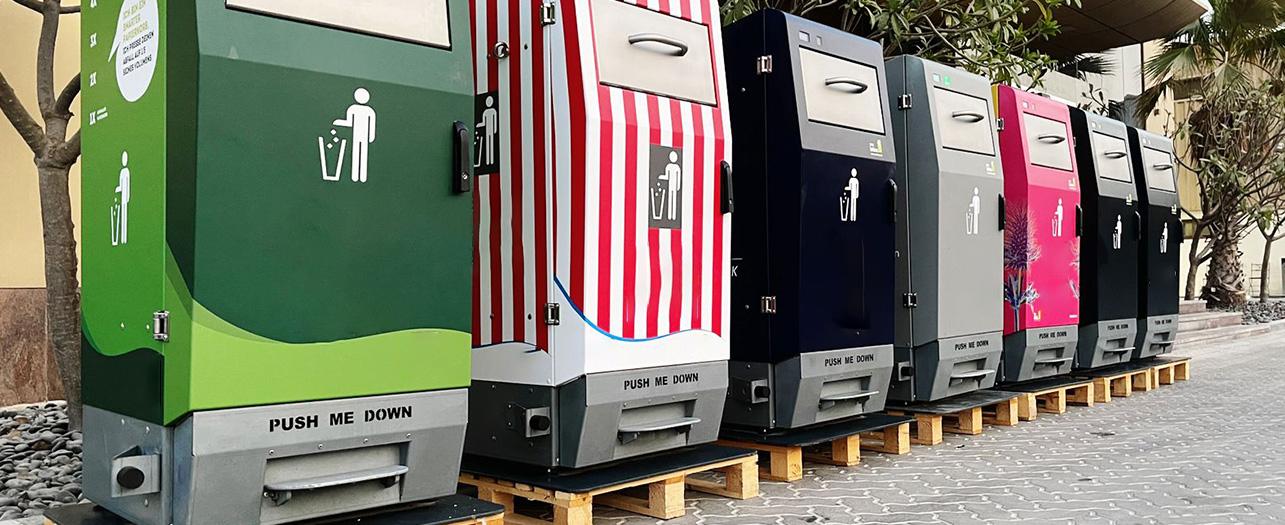
Dubai’s push to become one of the world’s smartest cities depends on technology that works quietly in the background. One of those unsung tools is the solar bin. These are public waste stations that use rooftop solar power to compact trash, extend holding capacity and send fill-level data to collection teams. POWER Bear’s Mr. Fill Solar Compacting Bin is a practical example of the kind of solution that helps turn strategy into visible, everyday improvements in urban life and supports the dubai smart city vision.
Meet Mr. Fill Solar Compactors by POWER Bear
Mr. Fill comes in three variants to suit different city locations. The 120L Ultra Fill Solar Compactor Bin is compact but powerful, able to hold up to seven times more waste than a traditional bin thanks to its compaction system. The 120L Ultra Fill Solar Compactor Bin Little keeps the same core features in a sleeker package, trimmed by 20 centimetres for a discreet fit on busy streets. For larger public spaces, the 240L Ultra Fill Solar Compactor Bin offers maximum on-site capacity while still running on clean solar energy. All variants combine durability with low maintenance, making them ideal for roads, parks, transit hubs and mixed-use developments.
Why these solar bins matter for Dubai
Space is premium in city centres and operational efficiency is central to smart city goals. A single solar trash bin that compacts waste can reduce collection frequency dramatically. That translates into fewer waste trucks on the road, less traffic disruption, lower fuel use and a measurable cut in CO2 emissions. Placed in the right spots, these bins improve cleanliness, reduce overflowing litter and free municipal resources for other smart-city projects. These are straightforward, high-impact advantages and are core benefits of solar-powered waste bins.
How solar bins work and integrate with city systems
Understanding how solar bins work clarifies why they are so useful. Solar panels charge onboard batteries. When sensors detect rising fill levels the compaction motor compresses the contents, multiplying holding capacity. The bin’s fill-level sensors send data to a cloud dashboard or municipal system, allowing collection teams to use dynamic routing rather than fixed schedules. That data layer is what turns a simple solar bin into a component of a smart network: the city knows where and when to send trucks, and maintenance can be scheduled efficiently.
Design and placement for urban value
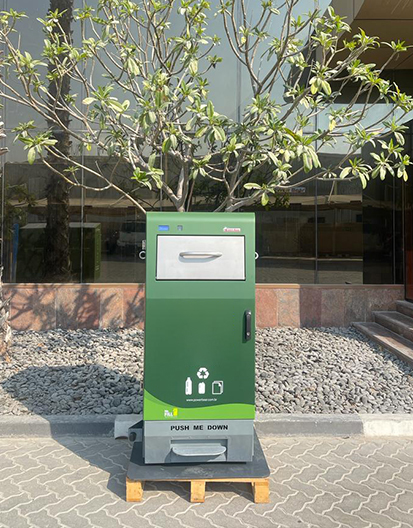
Selecting the right model and location matters. The 120L variants work well on busy walkways, outside retail strips and near transit stops where a neat profile is important. The 240L should be prioritised for parks, plazas and large commercial clusters that generate high volumes of waste. Considerations include sun exposure for reliable charging, visibility to encourage use, and secure mounting to handle public environments. Units with bag dispensers or clear signage increase use and reduce littering.
Long term impact and the future of smart waste bins in Dubai
As Dubai expands its digital infrastructure, the future of smart waste bins in Dubai will look like a connected network of compactors that visibly improve public cleanliness while feeding operational data into city systems. That network reduces carbon emissions from collection vehicles, lowers operational costs and makes public areas more pleasant and hygienic. Mr. Fill Solar Compacting Bin is a practical building block for that future, combining renewable energy, mechanical compaction and remote monitoring.
Final thoughts
Smart cities are built from many small, coordinated improvements. Solar-powered waste bins take sunlight and turn it into cleaner streets and smarter collection routes. For city planners, property managers and community leaders working to support the Dubai smart city vision, investing in Mr. Fill solar compacting bins is a practical step with measurable results: fewer collections, lower emissions and a cleaner urban environment.
